

Online Reading and Analysing Case Laws Course [Using AI]
Master the skill of reading, interpreting and analysing judgments through structured and AI-assisted techniques. Learn how to identify material facts, legal issues, judicial reasoning, ratio decidendi and key principles with clarity.
About the Online Certificate Course on Reading and Analysing Case Laws
Reading judgments is essential for legal research, drafting, mooting, examinations, internships and courtroom practice. However, long facts, multiple arguments and complex reasoning can make judgments difficult to understand without a structured method.
This course teaches learners how to break down judgments into their core components, including material facts, legal issues, arguments, judicial reasoning, ratio decidendi, obiter dicta and the final decision.
Learners are introduced to practical reading methods, note-making techniques, case-brief formats and approaches for extracting legal principles from lengthy decisions.
The course also explains how artificial intelligence may support case analysis, while highlighting the limitations and risks of relying on AI-generated legal summaries without independent verification.
Common Case Analysis Problems Covered
- Difficulty identifying material and immaterial facts
- Confusion between legal issues and general questions
- Failure to separate ratio decidendi from obiter dicta
- Missing important precedents and cited authorities
- Producing incomplete or unclear case briefs
- Over-reliance on inaccurate AI-generated summaries
Learn to Read Judgments With Structure and Confidence
Build a repeatable method for understanding cases, extracting legal principles and preparing clear case briefs.
Skills Learners Can Develop
The course builds practical skills that support academic work, legal internships, mooting, research and professional practice.
Read Judgments Strategically
Use skimming, detailed reading and structured note-making methods to understand lengthy decisions efficiently.
Identify Material Facts
Separate legally relevant facts from background information and understand why the distinction matters.
Frame Legal Issues
Recognise the precise questions of law considered by the court instead of relying on broad factual questions.
Analyse Arguments
Understand the structure, relevance and legal basis of submissions made by each side.
Extract Legal Principles
Identify the rule applied by the court and distinguish binding reasoning from incidental observations.
Prepare Case Briefs
Document judgments in a concise format covering facts, issues, arguments, reasoning and decision.
Trace Precedents
Spot cited cases and understand how earlier authorities influence judicial reasoning.
Use AI Responsibly
Use AI as an assisting tool while independently checking citations, facts, principles and conclusions.
Designed for Law Students and Legal Professionals
Law Students
Useful for students preparing assignments, examinations, moot court memorials, research papers and internships.
Recent Law Graduates
Helps graduates strengthen the legal reading and research skills expected in entry-level legal roles.
Lawyers and Advocates
Relevant for practitioners who need to identify useful authorities and analyse judgments for drafting or arguments.
Legal Researchers
Supports researchers in extracting principles, comparing decisions and documenting case developments.
Corporate Legal Professionals
Helpful for professionals reviewing judicial developments and understanding their impact on legal advice.
Anyone Seeking Legal Upskilling
Suitable for learners who want a structured introduction to judgment reading and case briefing.
Move Beyond Simply Reading the Final Order
Learn how facts, issues, arguments and reasoning come together to produce a judicial decision.
Reading and Analysing Case Laws Course Plan
The curriculum moves from the fundamentals of case analysis to practical reading, briefing and responsible use of AI.
Module 1: Introduction to Case Analysis
- Importance of case analysis in law school and practice
- Use of case analysis in moots, internships, examinations, drafting and research
- Brief overview of the Indian court and tribunal hierarchy
- Using case analysis in moot memorials, research papers and assignments
- Summarising judgments for study notes
Module 2: Key Elements of a Case
- Case name, citation, parties, bench and court
- Appellant, respondent, petitioner and other party descriptions
- Material and immaterial facts
- Legal issues raised before the court
- Arguments advanced by both sides
- Judgment, decision and operative directions
- Ratio decidendi and obiter dicta
- Dissenting and concurring opinions
Module 3: How to Read and Identify Key Components
- Skimming compared with detailed reading
- Marking and note-taking techniques
- Using flowcharts and diagrams for complex facts
- Extracting legal principles
- Spotting precedents and citations within judgments
Module 4: Step-by-Step Case Analysis Technique
- Practical method for analysing a judgment
- Separating facts, issues, arguments and reasoning
- Understanding the connection between legal rules and outcomes
- How not to use AI in case analysis
- Checking AI-generated summaries against the original judgment
Module 5: How to Document a Case Brief
- Purpose and structure of a case brief
- Writing concise factual summaries
- Recording issues and arguments clearly
- Documenting ratio, obiter and final decision
- Adapting case briefs for examinations, moots and research
Module 6: Conclusion and Application
- Review of the complete case analysis process
- Applying the method across different types of judgments
- Developing a consistent judgment-reading practice
- Using case briefs for academic and professional work
Where Case Analysis Skills Are Used
Moot Court Competitions
Finding authorities, understanding precedents and applying judgments in memorials and oral submissions.
Legal Research
Extracting principles, comparing decisions and building well-supported legal propositions.
Legal Drafting
Using judgments appropriately in petitions, written submissions, opinions and advisory notes.
Internships
Preparing case notes, judgment summaries and research updates for lawyers and legal teams.
Examinations
Understanding landmark cases and presenting legal principles with accurate factual and judicial context.
Research Papers
Using judicial authorities to support analysis, arguments and academic conclusions.
Litigation Practice
Locating relevant precedents and understanding how courts have interpreted legal provisions.
Professional Updates
Tracking recent judgments and explaining their legal and practical significance.
Meet the Mentor

Adv. Akansha Vajpayee
Adv. Akansha Vajpayee is a corporate lawyer with 7+ years of professional experience and litigation exposure. She specialises in practical legal drafting and case analysis training, helping learners connect legal concepts with their use in academic and professional work.
Strengthen a Skill Used Across Every Area of Law
Learn a structured case-reading method that supports research, drafting, mooting and litigation.
Add a Verifiable LawMento Certificate to Your Profile
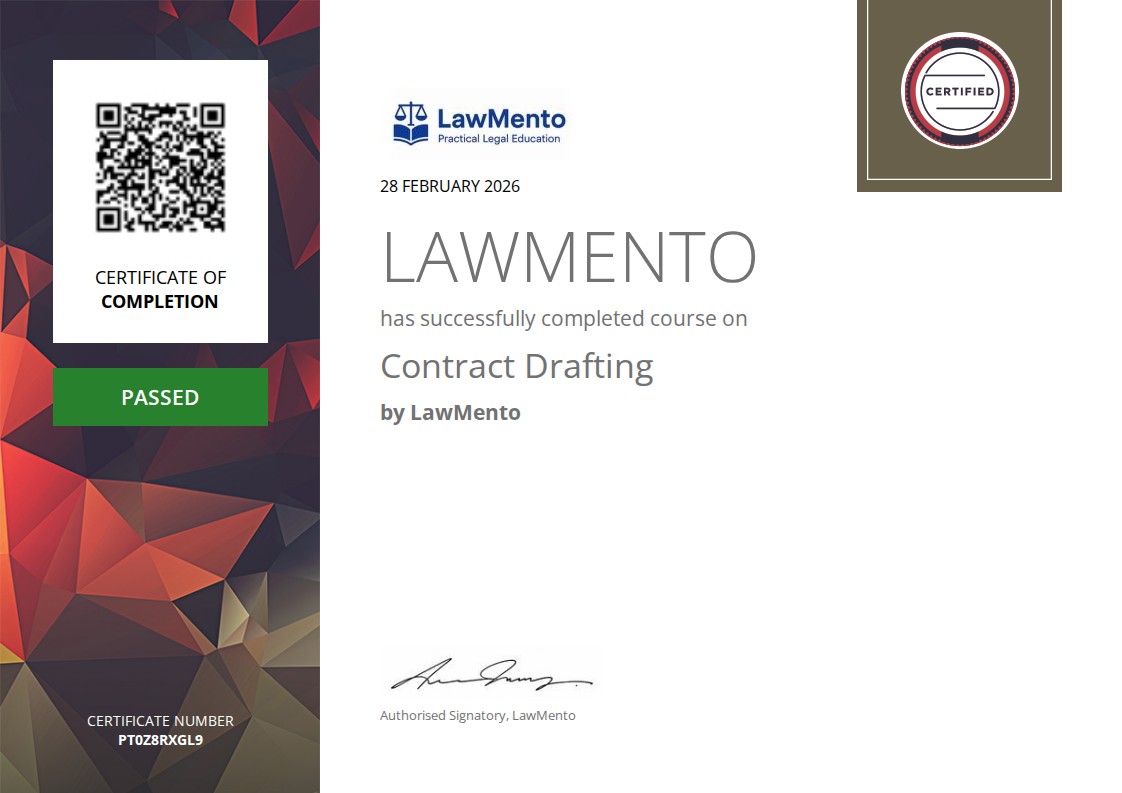
Each LawMento certificate includes the learner’s name, course title, completion date, authorised signature, unique certificate number and QR code. It may be added to a CV, LinkedIn profile or professional portfolio as evidence of continued skill development.
Questions About the Case Law Analysis Course
What is included in the course?
The course includes 7+ hours of structured learning, six focused modules, 6+ reading resources, one-year access and a certificate of completion.
Is this course suitable for law students?
Yes. It is especially useful for law students preparing for moots, internships, examinations, assignments and research work.
Can practising lawyers enrol?
Yes. Lawyers and advocates can use the course to strengthen their judgment-reading, precedent analysis and case-briefing skills.
Does the course explain ratio decidendi and obiter dicta?
Yes. The curriculum explains both concepts and shows how to distinguish the binding legal principle from incidental judicial observations.
Does the course cover the use of AI?
Yes. It explains how AI can assist case analysis and also highlights the risks of inaccurate summaries, fabricated citations and unverified conclusions.
Will I learn how to prepare a case brief?
Yes. A dedicated module explains how to document facts, issues, arguments, reasoning, ratio, obiter and the final decision in a clear format.
When will course access be provided?
Access is provided immediately after successful payment. Learners should check the email address used during enrolment.
How long will I have access?
The course remains accessible for one year from enrolment.
Start Learning Case Law Analysis
Join the online certificate course and receive immediate access to the complete curriculum, resources and certificate pathway.