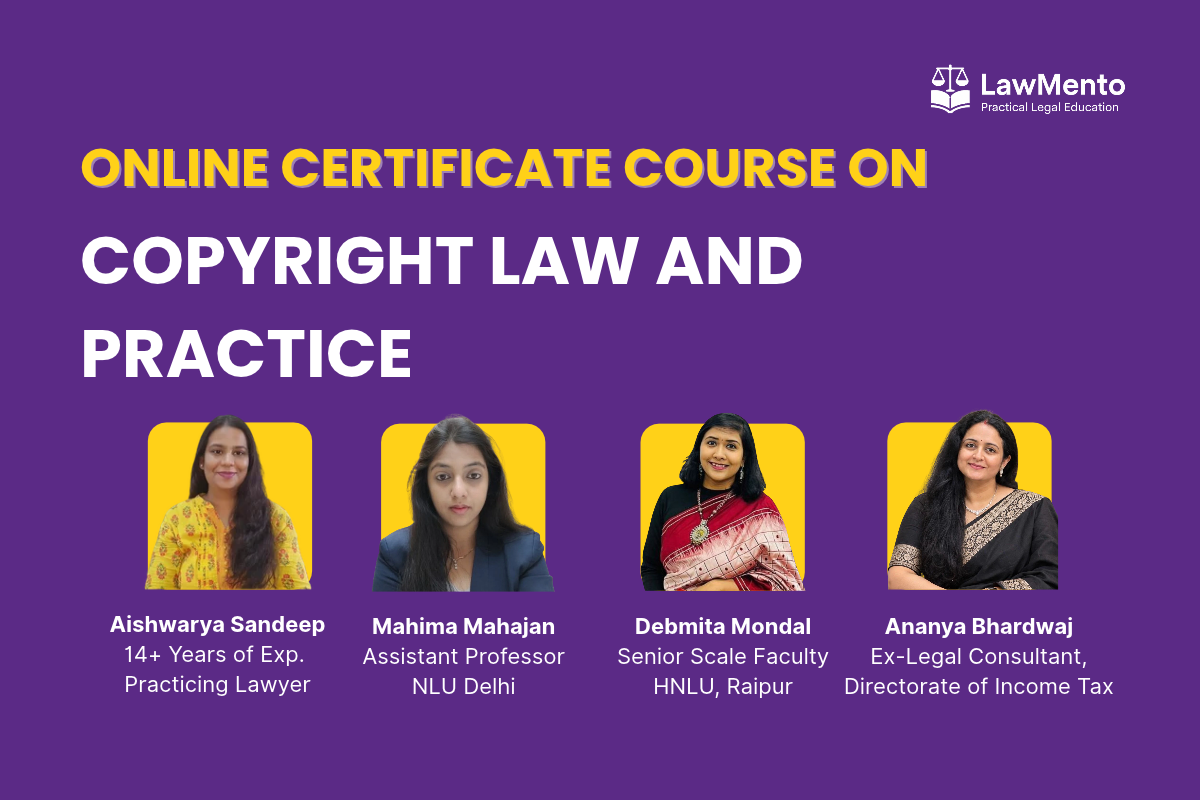
Online Certificate Course on Copyright Law and Practice
Build a practical understanding of copyright protection, ownership, licensing, infringement, media and entertainment rights, digital copyright, artificial intelligence and copyright drafting through a structured 15-module course.
About the Online Certificate Course on Copyright Law and Practice
Copyright law affects books, films, music, software, photographs, digital content, advertisements, fashion prints, online education and almost every modern creative industry. Understanding how copyright arises, who owns it and how rights are licensed or enforced is increasingly relevant for legal professionals and creators alike.
This online copyright law course explains the complete lifecycle of copyright protection, beginning with copyrightable works, originality, authorship and ownership and moving through economic and moral rights, registration, licensing, assignment, infringement, exceptions and enforcement.
The copyright law and practice course also examines how copyright operates in media and entertainment, fashion, social media, online platforms and the digital economy. Learners are introduced to chain of title, rights clearance, music licensing, user-generated content, online takedowns and practical enforcement strategy.
A dedicated drafting module covers copyright assignment deeds, licensing agreements, infringement notices, DMCA takedown notices and moral-rights waiver clauses. The curriculum also addresses emerging questions around AI-generated works, authorship and machine creativity.
Key Copyright Problems This Course Examines
- Determining whether a work qualifies for copyright protection
- Identifying authorship, first ownership and employment-related ownership
- Structuring copyright assignments and licences
- Assessing infringement, fair dealing and statutory exceptions
- Clearing rights for films, music, OTT and advertising content
- Handling digital takedowns, AI-generated content and enforcement
Learn Copyright From Creation to Commercialisation
Study ownership, rights, licensing, infringement, enforcement, media practice, digital platforms, AI and drafting in one structured course.
Skills Learners Can Develop
The copyright law certificate course combines legal principles with commercial, digital and drafting knowledge relevant to modern copyright practice.
Assess Copyrightability
Apply originality principles, the idea-expression distinction and statutory exclusions to different categories of works.
Determine Ownership
Analyse authorship, first ownership, employment, commissioned works, joint authorship and government works.
Structure Transactions
Understand assignments, exclusive and non-exclusive licences, royalties and contractual safeguards.
Analyse Infringement
Identify infringement, fair dealing, statutory exceptions, intermediary issues and available defences.
Handle Media Rights
Work with chain of title, rights clearance, music publishing, OTT content, advertising and talent agreements.
Draft Copyright Documents
Learn the structure of assignment deeds, licensing agreements, infringement notices and takedown notices.
Navigate Digital Copyright
Understand social media content, platform policies, online education, takedown mechanisms and digital enforcement.
Evaluate AI Issues
Examine AI authorship, machine-generated works, originality and comparative approaches across major jurisdictions.
Designed for Learners and Legal Professionals
Law Students
Useful for undergraduate and postgraduate students interested in intellectual property, media, entertainment, technology and commercial law.
Recent Law Graduates
Supports graduates seeking structured knowledge of copyright ownership, licensing, enforcement and transactional practice.
Lawyers and Advocates
Relevant for practitioners handling infringement, licensing, media transactions, digital content and copyright disputes.
IP and Media Professionals
Helpful for professionals working with rights clearance, content licensing, publishing, entertainment or brand-related IP.
Creators and Content Professionals
Provides legal context for ownership, licensing, attribution, platform use and protection of creative works.
Anyone Seeking Upskilling
Suitable for learners who want a structured introduction to copyright law and its practical applications.
Study Copyright Through Doctrine, Industry Practice and Drafting
Receive 8+ hours of lessons, 15 modules, 15 resources, practical drafting exposure and one-year access.
Copyright Law and Practice Course Plan
The curriculum moves from copyright foundations and ownership to commercialisation, enforcement, media practice, AI, digital platforms, drafting and career pathways.
Module 1: Foundations of Copyright Law
- Concept, purpose and justification of copyright
- Copyright as an intellectual property right
- Economic rights vs moral rights
- International copyright framework: Berne Convention, TRIPS and WIPO
- Structure of the Indian Copyright Act, 1957
Module 2: Copyrightable Works and Originality
- Types of works protected under Indian law
- Originality standards in India
- Idea-expression dichotomy
- Functional and derivative works
- What is excluded from copyright protection
Module 3: Authorship, Ownership and First Ownership Rules
- Who is an author under the Act
- First ownership principles
- Copyright in employment and commissioned works
- Joint authorship and collective works
- Government works and public ownership
Module 4: Rights Conferred by Copyright
- Economic rights of copyright owners
- Moral rights of authors
- Special rights in films and sound recordings
- Neighbouring and related rights
Module 5: Term, Registration and Public Domain
- Duration of copyright protection
- Copyright registration process
- Legal effect of registration
- Public domain works and reuse
- Copyright notices and attribution
Module 6: Copyright Commercialisation and Transactions
- Assignment and licensing of copyright
- Exclusive and non-exclusive licences
- Royalty structures and statutory safeguards
- Drafting copyright agreements
Module 7: Copyright Infringement and Exceptions
- Meaning and types of infringement
- Fair dealing under Section 52
- Educational, research and news reporting exceptions
- Digital infringement and intermediary liability
- Defences available to alleged infringers
Module 8: Remedies and Enforcement
- Civil remedies: injunctions, damages and accounts
- Criminal offences and penalties
- Border enforcement and customs measures
- Interim and urgent reliefs
- Practical enforcement strategy
Module 9: Copyright in Media and Entertainment Practice
- Copyright ownership in films, music and OTT content
- Chain of title and rights clearance
- Music publishing and licensing
- Copyright issues in advertising and branding
- Talent and producer agreements
Module 10: Copyrights in Fashion Designs and Prints
Explore copyright issues affecting fashion designs, artistic works, prints and their interaction with commercial use.
Module 11: Copyright and Artificial Intelligence
- Who is the “author” in AI-generated works?
- Copyrightability of AI-generated content under Indian and global laws
- Comparative study of UK, EU and US approaches to AI authorship
- Case laws and policy positions on machine creativity
- Practical challenges in proving originality and infringement in AI works
Module 12: Copyright in the Digital Economy
- Copyright on social media platforms
- User-generated content and platform policies
- Online takedowns and notice mechanisms
- Copyright issues in online education and e-learning
- Digital enforcement challenges
Module 13: Copyright Agreements, Drafting and Enforcement Documents
- Different types of copyright agreements and how to draft them
- Copyright assignment deed drafting
- Copyright licensing agreement drafting
- Other copyright-related drafting
- Notice for copyright infringement
- Take-down notice under DMCA
- Drafting of moral rights waiver clause
Module 14: Copyright Practice and Career Pathways
- Copyright litigation practice
- Transactional IP advisory roles
- Media and entertainment law practice
- In-house and policy roles
- Building a niche in copyright, media and AI law
Module 15: Conclusion
Consolidate the key concepts, practical skills and professional applications covered across the course.
Where Copyright Law and Practice Is Used
Copyright Advisory
Assessing copyrightability, authorship, ownership, duration, registration and reuse of protected works.
Media and Entertainment
Managing rights in films, music, OTT content, publishing, advertising and talent arrangements.
Licensing and Assignment
Commercialising creative rights through licences, assignments, royalties and related agreements.
Copyright Litigation
Infringement analysis, fair dealing, injunctions, damages, criminal remedies and enforcement strategy.
Digital Platforms
Handling social media content, user-generated content, platform policies, takedowns and intermediary issues.
Rights Clearance
Reviewing chain of title, permissions and licences before content is produced, distributed or published.
Fashion and Creative Industries
Understanding protection of artistic works, designs, prints and commercially exploited creative assets.
AI and Emerging Technology
Advising on AI-generated works, authorship, originality, training data and evolving copyright questions.
Meet the Mentors

Adv. Aishwarya Sandeep
Intellectual Property and Media Lawyer with 14+ years of experience and extensive expertise in copyright, patents, trademarks, technology law and commercial IP transactions.

Ms. Mahima Mahajan
IPR academic and practitioner pursuing a Ph.D. from Himachal Pradesh National Law University, with an LL.M. in IPR from NLU Jodhpur. A UGC-NET qualified scholar with 5+ years of experience across academia, practice and government service, she has taught at NLU Delhi and served as a Hearing Officer at the Trade Marks Registry, Government of India.

Dr. Debmita Mondal
Assistant Professor (Senior Scale) at Hidayatullah National Law University with 10+ years of teaching and research experience.

Dr. Ananya Bharadwaj
Legal academic and researcher with a Ph.D. from KIIT University and an LL.M. in Corporate Law from NLU Odisha, where she was a Gold Medalist. She is UGC-NET qualified and has teaching experience in competition law, e-commerce, corporate governance, contracts and public international law, along with prior experience as Legal Consultant at the Directorate of Income Tax (Legal & Research), CBDT.
Build Practical Knowledge of Copyright Protection
Learn how creative works are protected, owned, licensed, commercialised, enforced and challenged across traditional and digital industries.
Add a Verifiable LawMento Certificate to Your Profile
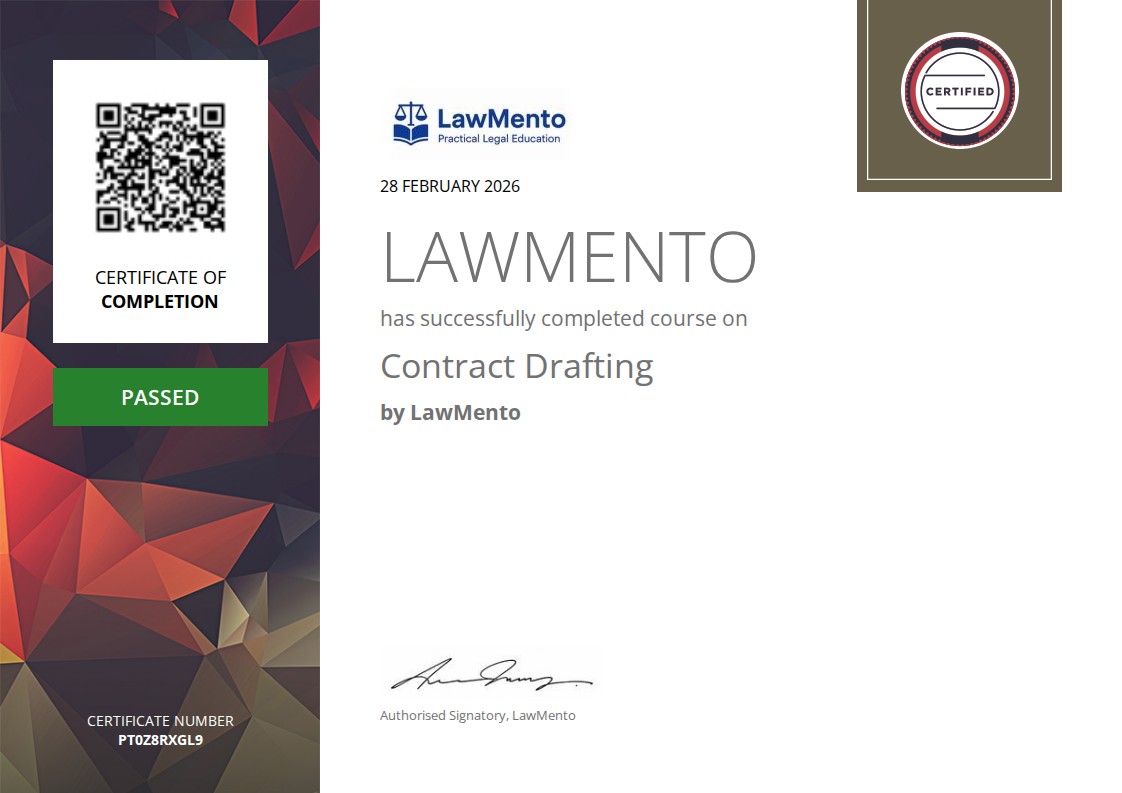
Each LawMento certificate includes the learner’s name, course title, completion date, authorised signature, unique certificate number and QR code. It can be added to a CV, LinkedIn profile or professional portfolio as evidence of continued skill development.
Questions About the Copyright Law and Practice Course
What is included in the online certificate course on copyright law and practice?
The course includes 8+ hours of structured learning, 15 modules, 15 resources, practical drafting exposure, one-year access and a certificate of completion.
Is this online copyright law course suitable for law students?
Yes. The course is suitable for undergraduate and postgraduate law students who want to understand copyright protection, ownership, licensing, infringement, media practice and digital copyright.
Can practising lawyers enrol in the copyright law course?
Yes. Lawyers and advocates can use the course to strengthen their understanding of copyright advisory, infringement, licensing, enforcement, media transactions and digital-content issues.
Does the course include copyright agreement drafting?
Yes. The curriculum covers copyright assignment deeds, licensing agreements, infringement notices, DMCA takedown notices and moral-rights waiver clauses.
Does the course cover media and entertainment copyright?
Yes. It covers copyright ownership in films, music and OTT content, chain of title, rights clearance, music publishing, advertising and talent-related agreements.
Does the course cover copyright and artificial intelligence?
Yes. It examines AI authorship, copyrightability of AI-generated content, machine creativity, originality and comparative approaches in India and other jurisdictions.
Does the course provide a certificate?
Yes. Learners receive a certificate of completion after satisfying the applicable completion requirements.
When will course access be provided?
Access is provided immediately after successful payment. Learners should check the email address used during enrolment.
How long will I have access?
The course remains accessible for one year from enrolment.
Start Learning Copyright Law and Practice
Join the online certificate course and receive immediate access to the complete curriculum, resources and certificate pathway.